
Electric vehicles (EV) are an inevitable trend of the auto industry in the world and Vietnam is not an exception.
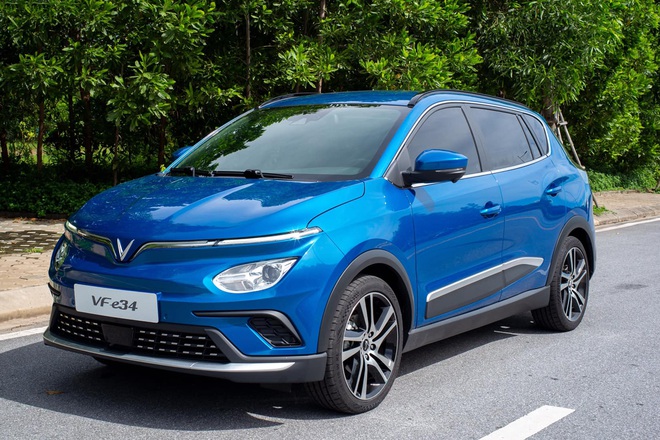
In particular, with the potential to develop clean power sources, Vietnam is the first country in the region with domestic enterprises successfully in producing electric cars with external factors and is considered a “golden” opportunity for developing electric car industry.
*Huge potential
According to a representative of VinFast, with a population of 100 million people, Vietnam promises to be a potential electric car market. Besides, Vietnam has great potential to develop clean power sources such as wind power, solar power, which is an important basis for electrification.
Especially, while Thailand and Indonesia are racing to attract investment, Vietnam is the first country in the region with domestic enterprises successfully in producing electric cars, having the opportunity to take the lead to develop the industry. If it is delayed another or two year, when other countries in the region have completed the legal foundation and infrastructure first, Vietnam will lose this rare opportunity.
This is also the reason why at the 2022 Consumer Electronics Show (CES) in the US, VinFast announced to stop producing petrol cars and switch to pure electric car production from the end of 2022. This is a turning point decision, making VinFast become one of the first gasoline car companies in the world switching to pure electric car in the global electric vehicle revolution.
According to Ms. Phan Thi Thuy Duong, Director of VinFast Battery Station Development Center, countries in the world have invested in electric vehicles and the number of these vehicles has increased four times from 2015 to 2020.
Not only in Europe, America, our neighboring countries such as China, Japan … all issued very specific policies, giving many incentives for production and direct incentives for users (tax exemption, financing reduction for car buyers…). At the same time, special attention has been paid to the development of charging station infrastructure to encourage the conversion of petrol vehicles to electric vehicles.
Pham Tuan Anh, Deputy Director of Industry Department (Ministry of Industry and Trade), said that in Vietnam, VinFast is the unique enterprise manufacturing electric vehicles and in general, electrified vehicles are not popular in the country.
There is few number of electrified vehicles (hybrid, plug-in hybrid and pure electric vehicles) in Vietnam. In 2019, there were 140 cars, in 2020 it increased to 900 cars and by the end of the first quarter of 2021, there will be 600 cars. All are imported cars and almost are hybrids, plug-in hybrids and battery vehicles account for a very small percentage.
Vice President of Vietnam Automobile Manufacturers Association (VAMA) Hiroyuki Ueda admitted that electric cars in Vietnam are still rare and almost no car manufacturers have really focused on business investment, except domestic automaker VinFast- enterprise manufactures vehicles and invests in a system of charging stations.
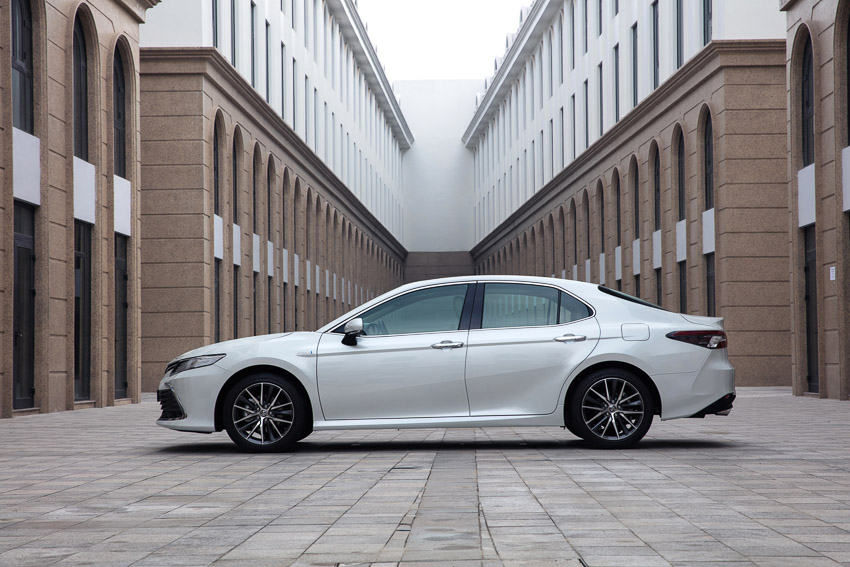
Meanwhile, Toyota is cooperating with University of Science and Technology to research the use of Hybrid vehicles and obtain positive results in terms of fuel consumption and emission criteria; Mitsubishi also has two joint research programs with the Department of Industry and Department of Industry and Trade of Danang city on the suitability of using BEV and PHEV vehicles in Vietnam…
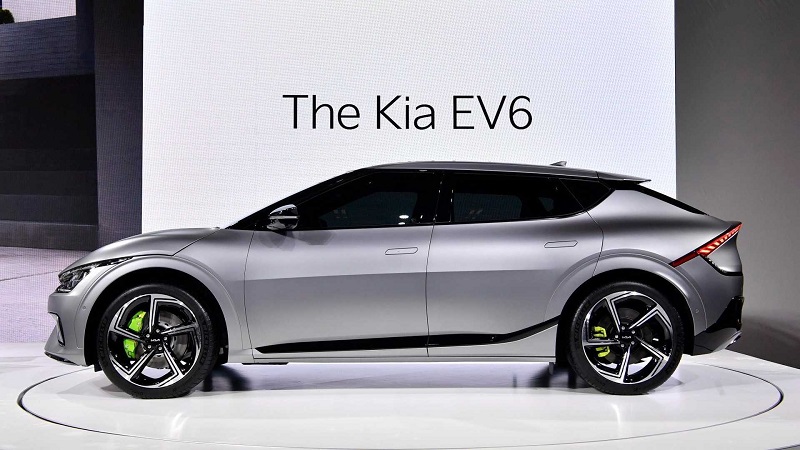
In particular, before VinFast handed over the e34 (VF 7) electric car to Vietnamese customers and opened the sale of e35 and e36 (VF 8 and VF 9) cars globally, a series of models such as Audi e-Tron, Jaguar i-Pace, Porsche Taycan also appeared in Vietnam as an exploration. Most recently, the information about the first EV6 electric car of KIA brand appeared at THACO’s Chu Lai complex was leaked causing many people to think that this model will soon be launched in the Vietnamese market. Connecting these events, it can be seen that the electric car segment will be very bustling in the future.
However, Mr. Hiroyuki Ueda also shared that in the Strategy for developing Vietnam’s automobile industry to 2025, with a vision to 2035, Vietnam encourages the production of environmental friendly vehicles (fuel-saving vehicles), hybrid vehicles, vehicles using biofuels, electric vehicles, etc.).
However, up to now, there has not been a clear roadmap for the development and conversion to this kind of vehicle, despite the fact that this is a transportation trend that needs to be developed in the future.
* Turning potential into reality
Regarding the above story, Mr. Pham Tuan Anh said that the development of electric vehicles depends on 3 main pillars (including the legal framework, supporting policies of countries; and additional incentive measures to protect electric vehicle sales from recession and expand the number of electric vehicle models and reduce battery prices); in which policy plays a leading role.
However, at present, there is almost no policy to encourage the development of electric vehicles in Vietnam. So far electric vehicles have only received special consumption tax incentives, which are lower than petrol and diesel cars. Along with policies, infrastructure, inconsistent regulations and standards are also major factors affecting the development of electric vehicles in Vietnam.
According to Mr. Trieu Viet Phuong, Deputy Director of the Vietnam Institute of Standards and Quality (Ministry of Science and Technology), despite efforts, the number of national standards (TCVN) and the system of international technical regulations (QCVN) for electric vehicles is still lacking and not synchronized with the world standard system, so it is necessary to supplement…
Mr. Hiroyuki Ueda said that without support of the Government, members of VAMA will find it lack of feasibility to invest in electric vehicles in Vietnam and this is the reason why electrified vehicles are not yet popular.
Based on the world trend, the representative of VAMA suggested that Vietnam soon issue standards on electrified vehicles and have a roadmap to apply for each vehicle model, namely HEV (hybrid electric vehicle or hybrid vehicle), PHEV (externally charged hybrid electric vehicle), BEV (Fully electric vehicle) and FCEV (Fuel cell electric vehicle).
Mr. Hiroyuki Ueda suggested that, in the short and medium term, HEVs and PHEVs vehicles could soon be popular in Vietnam because they do not require a widespread system of charging stations. In the long term, along with the expansion of renewable energy types, BEV will be more popular when the electric charging station system is covered and charging time is shortened.
In addition to supporting policies for electrified vehicle production in Vietnam such as environmental tax incentives, special consumption tax rates for each type of electric vehicles based on CO2 emissions, the Government also reduces registration fees to encourage the use of electric vehicles.
Along with that, there are policies to encourage investment in charging stations, building a network of fast charging stations that can be used for vehicles of many brands, firstly in big cities and stops on national highways.
Source : Bnews


