
Table of Contents
The phrase “Make in Vietnam” was first introduced by the Vietnamese Ministry of Information and Communications in December 2018. Since then, the “Make in Vietnam” initiative has had a significant impact on communication, expressing the desire and initiative of the Vietnamese people in technology mastery and development, as well as producing a vibrant environment with a wealth of potential to draw in foreign investors.
What is “Make in Vietnam”?
The “Make in” initiative has been around for a while, making its first debut in India in September 2014 to promote its domestic products and help transform the country into a global manufacturing hub. Following “Make in India,” the Chinese government unveiled the “Make in China 2025” strategy in 2015. Similar to the strategy’s name, China has set a goal to reach a 70% domestic product share by 2025 for some of its major industries.
In Vietnam, the phrase “Make in Vietnam” made its first appearance in mid-December 2018 at the Vietnam-Myanmar Information & Communication Technology (ICT) Forum under the theme “Digital Transformation in Government”. Later, the Vietnamese Ministry of Information and Communications continued to use the phrase and even made it the new slogan for its efforts to promote the ICT sector in Vietnam.
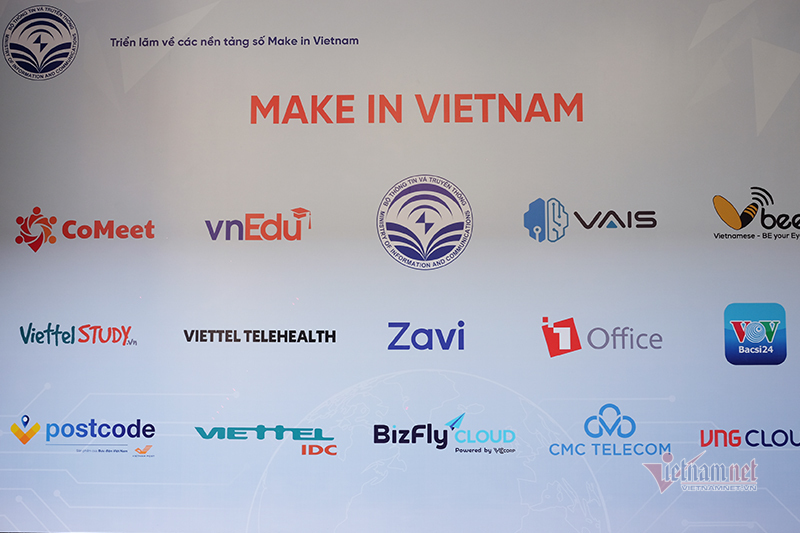
If “Made in Vietnam” is associated with content indicating the place of origin, localization rate, tariffs, import and export, the Ministry of Information and Communications’ slogan “Make in Vietnam” takes on a completely different meaning. “Make in Vietnam” represents the overall strategy and a call to Vietnamese digital enterprises to begin shifting their development focus.
While “Made in Vietnam” is bland and lacks initiative, the phrase “Make in Vietnam” both creates a significant impact on communication and expresses the desire and initiative of the Vietnamese people in technology mastery and development.
Through the “Make in Vietnam” strategy, Vietnam aims to transform its economy from one that is entirely dependent on imports and outsourcing to one that is capable of producing its own goods and taking a more active role in the global value chain.
An Ongoing Journey
In order to turn “Make in Vietnam” into real results and not have a vague slogan for media attention only, the Vietnamese government has been very proactive in providing guidelines and directives to assist businesses and relevant authorities on the road to adapting to the Fourth Industrial Revolution.
Data from the Ministry of Industry and Trade show that Vietnamese companies continued to experience relatively rapid growth in their exports of machinery, equipment, and spare parts between 2016 and 2020. Enterprises with 100% domestic capital have growth rates in 2017, 2018, 2019, and 2020 of 31.8%, 36.9%, 39.7%, and 33.1%, respectively; FDI enterprises have growth rates in 2017, 2018, 2019, and 2020 of 27.2%, 25.5%, 8.3%, and 51.1%, respectively.
Policies for the development of enabling infrastructure, creative capacities, human resources, and priority sectors and technologies are already in place to help the country achieve its goal of ranking among the top Southeast Asian nations in the Global Innovation Index (GII).
The National Digital Transformation Programme by 2025, with a focus on 2030, was recently approved in Vietnam. Changes in enterprise strategies, incentives, and public perception will all contribute to the initiative’s ability to hasten the digital transformation of businesses, administration, and production processes.

The Ministry of Industry and Trade has actively collaborated with localities to better align local industries, promoting regional, inter-regional, and international internal linkages, creating a basis for developing new models of territorial organization, production, and business organization; forming clusters of industries, interconnected production and supply value chains; and creating new development strategies in order to further improve Vietnam’s position in the global supply chain.
The Ministry of Industry and Trade also develops policies for downstream industries at the same time in order to expand domestic support sectors, build market capacity, and draw foreign investment.
According to a 2020 report by the Vietnam Chamber of Commerce and Industry, about 75% of the nation’s small and medium-sized businesses (SMEs) are ready to integrate digital technology into their management and operations. The difference in technology adoption rates between SMEs and large businesses has shrunk from over 20% to only 5%.
In terms of human resources, Decision No. 146/QD-TTg was signed at the beginning of the year, approving the Project to raise awareness, universalize skills, and develop human resources for national digital transformation by 2025, with an orientation to 2030.
In addition to improving labor productivity, adding value, and increasing competitiveness, the development of supporting industries is crucial to the economic restructuring toward industrialization and modernization. This increases the rate at which the processing and manufacturing industries contribute to the economy’s structure. The Government has issued many policies to encourage the development of supporting industries, such as corporate income tax incentives at 10% for 15 years, tax exemption for 4 years, and 50% reduction in corporate income tax in the next 9 years. The synchronous implementation of support solutions by the Government has promoted Vietnamese supporting industry enterprises to develop in both quantity and quality, improve production capacity, and participate more and more deeply in the global production chain.
Prospects for Foreign Investors
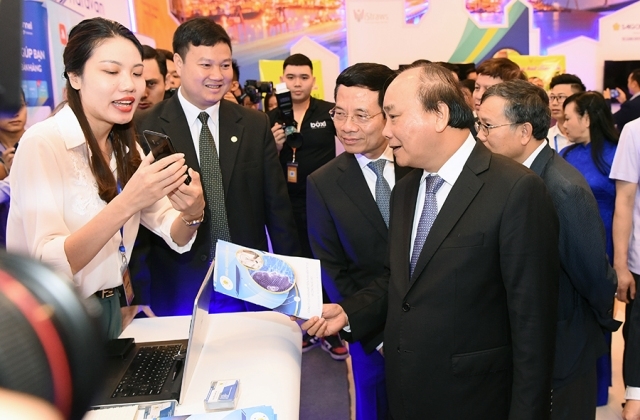
Many opportunities are now open for enterprises which apply new technologies thanks to the Government’s supporting policies and tax incentives for investors. The implementation of Resolution No.52-NQ/TW on digital transformation shows that the application of more advanced technology to production, business, and the digitization of Vietnam’s economy is inevitable and irreversible.
The benefits of this digital revolution are felt by both international e-commerce and manufacturing. Vietnam was able to use its geographic, economic, and national resources to its advantage to become a significant manufacturing hub in Asia. As a result, it is now regarded as one of the top locations for investors who are looking to diversify their supply chain.
Meanwhile, the Vietnam e-commerce market is vibrant and competitive with the presence of local and foreign players. Ho Chi Minh City and Hanoi are the main e-commerce hubs in Vietnam, thanks to their strategic location, excellent infrastructures, and an increasing number of logistics providers having invested in large-scale warehouses and logistics centers.
Conclusion
The future is bright for the ICT industry in Vietnam. As a key component in the digital revolution, ICT, with its slogan “Make in Vietnam”, will continue to drive the country and its economy forward, creating an open and competitive environment for businesses that are innovation-driven and quick to adapt.
Our experts at Viettonkin are prepared to give you the best answers to your unique problems if you need any help comprehending the opportunities that Vietnam will present or if you want to implement an effective and successful market entry strategy for foreign investors.
Feel free to contact us for thorough support and further information.


