
Table of Contents
Doing cross-border businesses in Indonesia may be a challenge for foreign investors as they are unfamiliar with Indonesian jurisdiction. Yet, if there is any business dispute, the investors should bear in mind cross-border litigation in Indonesia. Therefore, in this article, Viettonkin will help you to understand more on the topic.
Contractual Choice of Law
Indonesian courts respect the choice of governing law in a contract. A foreign law must be proven as a fact. However, in practice, the application of foreign laws in domestic court proceedings remains uncommon.
No Choice of Law and Non-contractual Claims
In the absence of choice of law and in non-contractual claims, the following rules apply:
- The law applied to property/goods is the law where the property/goods are located (lex rei sitae).
- The law applied to contracts is the law of the place where the contract was concluded (lex loci contractus).
- The law applied to persons is the law of the person’s domicile (lex domicilii).
(Articles 16, 17 and 18, General Regulations regarding Laws for Indonesia (Algemen Bepalingen van Wetgeving voor Indonesie) (AB)).
Indonesian courts respect the choice of jurisdiction in a contract. Indonesian courts cannot claim jurisdiction when it is explicitly excluded by the contract (including under an arbitration agreement).
Indonesia is not a party to any international conventions on the service of foreign proceedings. Parties wishing to serve foreign proceedings on an Indonesian party must comply with the Memorandum of Understanding (MoU) between the Indonesian Supreme Court (SC) and the Ministry of Foreign Affairs (MFA) regarding the Handling of Requests for Technical Assistance in Civil Matters.
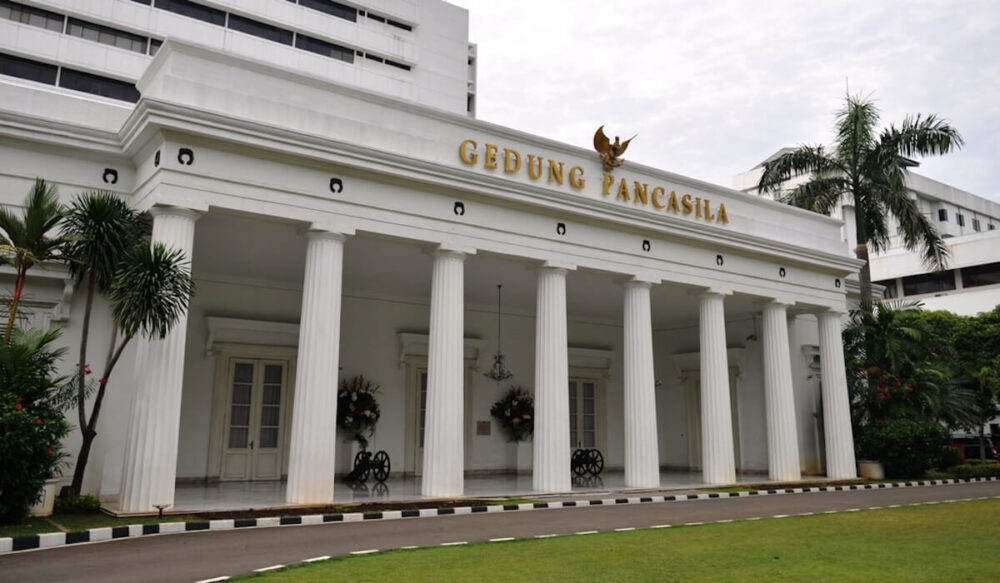
The MoU provides guidelines for the service of documents by foreign courts on Indonesian parties (and vice versa), including civil claim documents, court summons for civil proceedings, court summons for witnesses, court decisions or decrees, letters, deeds, and other documents relating to civil matters.
Documents for the service of foreign proceedings must be sent to the relevant country’s diplomatic representative in Indonesia, who then sends them to the MFA. The MFA passes them on to the SC for action to assist with the service of documents. Once service is completed, the SC sends a receipt of service to the MFA, which then sends the receipt back to the diplomatic representative.
As Indonesia is not a party to any international convention on this issue, foreign courts must rely on the MoU. The MoU provides a mechanism of rogatory letters through which a foreign court can request the assistance of Indonesian courts in obtaining witness testimony, documents, and other evidence.
The procedure for sending rogatory letters is almost identical to that of service of foreign proceedings. The only difference is that the SC will send the minutes of witness examination directly to the diplomatic representative (without sending them first to the MFA).
The legal process in cross-border litigation is not simple, yet it is much less of a burden for foreign investors if they have a leading expert in the industry to help them. As one of the prestiged professional service firms with over 10-year experience, Viettonkin is confident to deliver the best outcomes to our clients. Our professionals are insightful of Indonesian legal systems, thus they can assist you through the litigation process if commercial disputes occur. Let us be your right-hand man!


